Software Development
Why Clinical Data Integrity Is the Next Technical Requirement for Health-Tech ERPs
9 July 2026

The architectural landscape of health technology is undergoing a seismic shift. In previous decades, the primary focus for an Enterprise Resource Planning (ERP) system in healthcare was structural: does it store data securely? Today, as we navigate the complexities of 2026, that question has evolved into a clinical one: Is the data within the system fundamentally healthy?
For health-tech company founders and healthcare administrators, the challenge is no longer just preventing data breaches, but preventing “Informational Contamination.” This is the era of Clinical Data Integrity (CDI)—a technical requirement that bridges the gap between software engineering and microbiological precision.
Is your ERP spreading “digital pathogens” within your organization?

In a clinical lab, a single contaminated sample can invalidate months of research. In a digital healthcare ecosystem, contaminated information—outdated clinical guidelines, unverified AI-generated patient summaries, or mismatched diagnostic data—acts like a digital pathogen. When this data is transmitted through an ERP to various departments, it creates systemic failure.
According to a Harvard Business Review analysis on digital transformation, companies failing to maintain data integrity see a 30% increase in operational friction. In healthcare, this friction isn't just a financial metric; it's a patient safety risk. Clinical Data Integrity ensures that every data point—from procurement to patient discharge—is sterile, verified, and actionable.
Beyond Security: Implementing Information Hygiene in Custom Medical CRMs
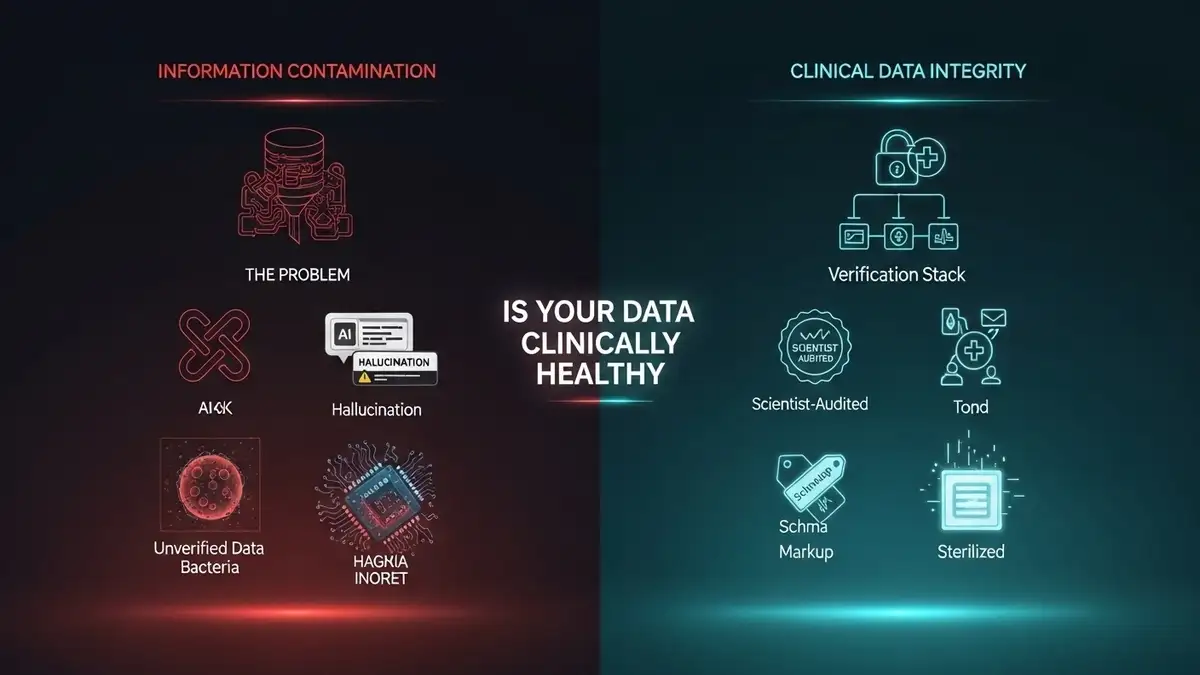
While security focuses on the “vault” (the database), Information Hygiene focuses on the “air quality” (the data itself). Custom medical CRMs are often the first point of contact for patient data. If hygiene protocols at the point of entry are weak, the entire system is compromised.
What is the true cost of “unsanitized” patient data?
The cost is twofold: reputational and algorithmic. Modern healthcare brands are now being judged by the technical precision of their digital footprints. Forbes reports that 75% of consumers lose trust in a brand that delivers inconsistent or inaccurate information.
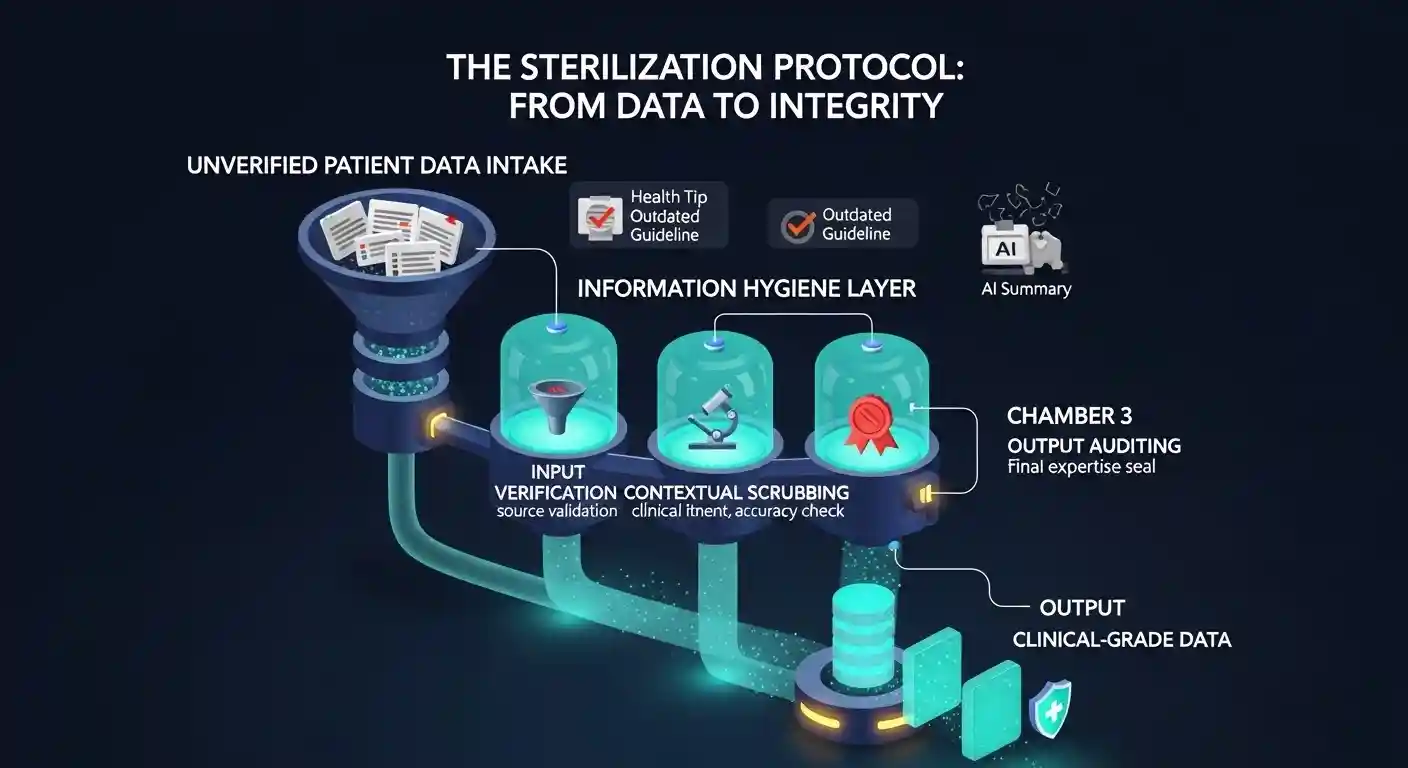
Implementing Information Hygiene involves a “Sterilization Protocol” for data:
- Input Verification: Going beyond mere form validation to clinical certification.
- Contextual Cleaning: Ensuring the CRM doesn't just store “data,” but “verified clinical intent.”
- Output Audits: Every patient-facing summary must be checked against current clinical standards.
Why most medical CRMs fail the “clinical hygiene” test?
Most systems are built by generalist developers who prioritize UI/UX over clinical accuracy. However, a “Scientist-Marketer” approach treats the CRM as a living culture. Just as a microbiologist monitors a Petri dish for invasive species, a digital strategist must monitor the CRM for “information decay.”
The Shift to FHIR-based Interoperability and E-E-A-T Compliance
The global healthcare community has coalesced around the FHIR (Fast Healthcare Interoperability Resources) standard. However, 2026 introduced a new layer of complexity: the intersection of FHIR with E-E-A-T (Experience, Expertise, Authoritativeness, and Trustworthiness) compliance.
How does FHIR Interoperability affect your brand's trust score?
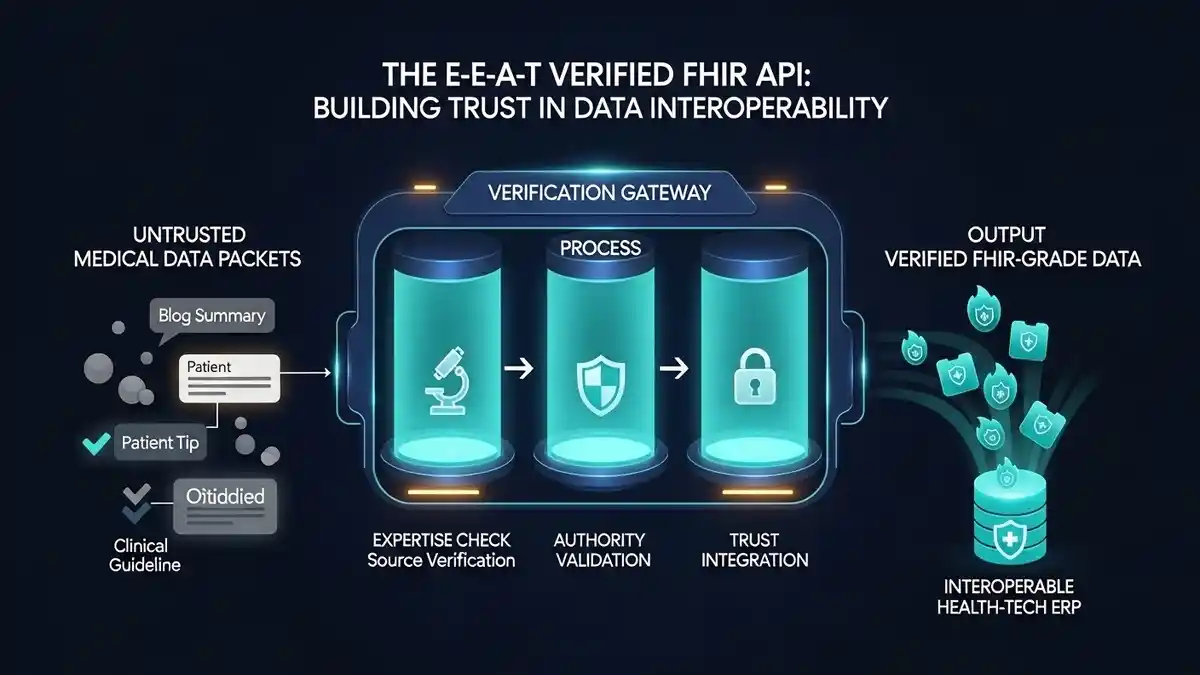
Interoperability is the ability of different systems to “talk” to each other. If your ERP is sharing unverified data via FHIR APIs, you're essentially spreading misinformation at scale. E-E-A-T is no longer just for blog posts; it's a technical requirement for data packets.
Data flowing from your system must now carry “Expertise Metadata.” This means every clinical recommendation delivered by your software must be programmatically linked to a verified source or a certified professional. According to Yale University research on health informatics, source transparency is now the primary driver of digital adoption in healthcare.
Can a health-tech system truly be autonomous without human oversight?
This is a critical debate for modern administrators. The answer is a definitive No. In 2026, the most effective systems are those that use AI for speed but rely on a “Clinical Framework” for verification.
Autonomy in health-tech calls for a “closed-loop” system where:
- AI generates the draft.
- The Clinical Framework checks it against a Wikipedia-level repository of medical truths.
- The Human Expert provides the final “Information Hygiene” seal of approval.
Why “Clinical-Grade” Digital Strategy is replacing Traditional SEO?
Traditional digital marketing focuses on “reach.” Clinical-Grade strategy focuses on “Authority Retention.” For a clinic in New York or a health-tech startup in Dhaka, being seen is easy; being believed is the challenge.
When your ERP and CRM are built with Clinical Data Integrity, your marketing becomes a byproduct of your operational excellence. You are no longer “selling” a service; you are “displaying” an expertise backed by the very architecture of your software.
The impact of information hygiene on patient conversion
Patients are more informed than ever before. They are using sophisticated research tools to verify claims made by healthcare providers. If your website states one thing, but your patient portal (driven by your ERP) suggests another, the conversion funnel breaks down.
Investopedia statistics highlight that “Informational Asymmetry”—where one party has superior information than the other—is the leading cause of market inefficiency. By ensuring high Information Hygiene, you remove this asymmetry and build a “Trust Cycle” with your patients.
Does your current software vendor understand microbiology?
This might seem like an odd question for a software audit, but for a specialist approach, it's foundational. An 8-year tenure in healthcare, combined with a Microbiology degree, enables a unique perspective on software: Data is a living organism.
If your software vendor treats data as a static, dead object, they will never be able to implement true Information Hygiene. They will build a “clean” looking site that is clinically “septic.”
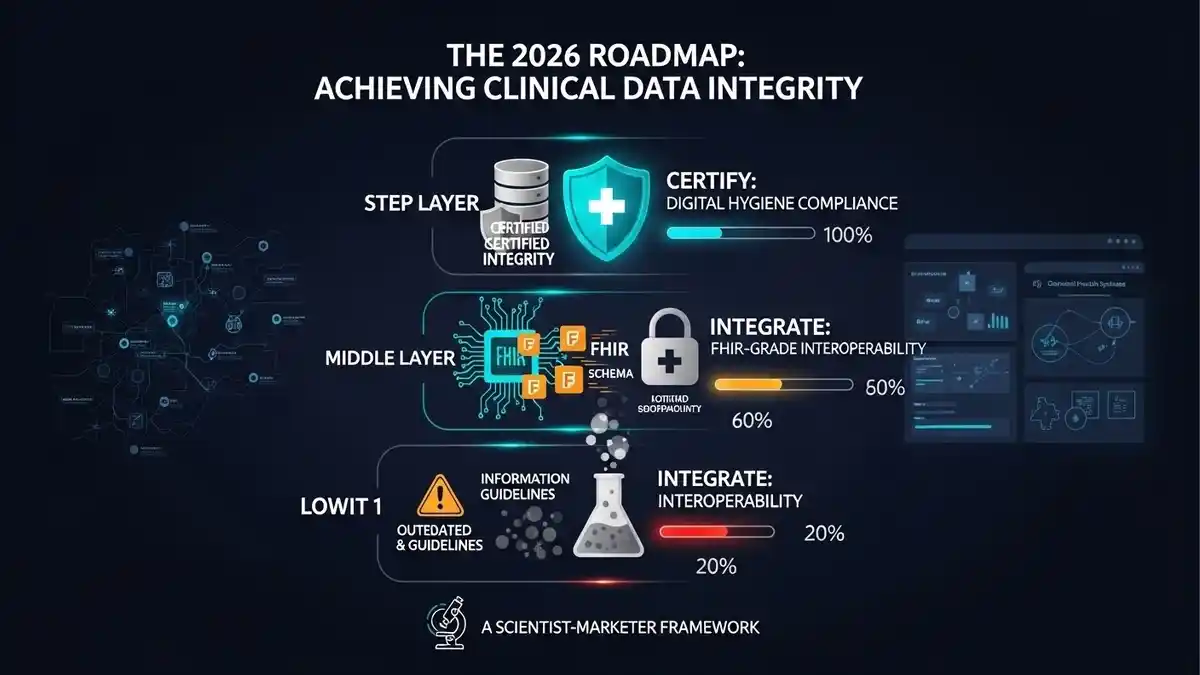
The 2026 Health-Tech ERP Implementation Roadmap
To stay competitive and compliant, health-tech founders should follow this tripartite roadmap:
- Audit for Data Decay: Identify where in your ERP your clinical guidelines have become outdated.
- Integrate FHIR-grade Schema: Ensure your data is ready to be shared with the broader medical ecosystem without losing its “Expertise” indicators.
- Book a Digital Hygiene Audit: Don't wait for a dip in patient trust or a technical sanction.
Executing this roadmap effectively often requires specialized technical and regulatory expertise. This is where experienced ICT consultants can make a measurable difference, helping you modernize your systems without disrupting critical operations.
Partnering with experts like Vicedomini Softworks can provide the strategic guidance and implementation support needed to align your ERP with evolving health-tech standards, ensuring both compliance and long-term scalability.
Conclusion: The Future Belongs to the “Scientist-Marketer”
The convergence of healthcare and technology has moved past the “App” phase and into the “Authority” phase. Those who treat their ERP and CRM as extensions of their clinical lab—prioritizing integrity, hygiene, and expertise—will lead the market.
Whether you're running a real estate financial consultation or a multinational medical lab, the rules of 2026 are clear: The most “sterile” information wins.